Best overall starting point: KnowBe4; best for adaptive coaching: Hoxhunt; best for self-hosted campaigns: Gophish. Cyber Aware’s 2026 verdict is to choose a Microsoft Attack Simulation Training alternative around the work your team needs to improve: running campaigns, teaching safer decisions or managing an ongoing awareness programme.
TL;DR
- KnowBe4 is the default Microsoft Attack Simulation Training alternative to evaluate for phishing simulation and security awareness training.
- Hoxhunt suits teams prioritising adaptive phishing exercises and individual coaching.
- Proofpoint suits buyers prioritising threat-informed awareness; usecure suits smaller IT teams seeking automated training.
- Gophish suits technical teams that want self-hosted phishing campaigns and can manage the supporting infrastructure.
- Keep Microsoft Attack Simulation Training when a separate platform does not solve a demonstrated problem.
Why this matters
Replacing Microsoft Attack Simulation Training changes more than the campaign editor. You introduce another administration process, another employee experience and another set of records to maintain.
Start with the problem, not the shortlist. Are administrators spending too long preparing campaigns? Do employees finish lessons without knowing how to report suspicious messages? Do managers receive completion reports but no clear action?
This Cyber Aware security awareness training guide separates five alternatives by those buying decisions. For a 2026 evaluation, keep Microsoft Attack Simulation Training as the baseline rather than assuming that a separate platform automatically improves your programme.
Switch only when the alternative demonstrates a better workflow or learning experience against a written requirement. A longer feature list is not enough.
What makes the best attack simulation training alternative?
Use these six criteria before comparing vendors. Each criterion should produce evidence you can inspect during a demonstration or pilot.
- Campaign administration: Can your administrator select recipients, prepare a scenario, schedule delivery and review results without unnecessary handoffs?
- Learning relevance: Does the lesson explain the decision employees need to make, rather than merely identifying the clues in a simulated email?
- Employee reporting: Can staff report suspicious messages through a clear process, and can your security team distinguish reports from actual incidents?
- Audience management: Can you maintain the right employee groups, including starters, leavers, contractors and staff without standard mailboxes?
- Reporting quality: Can you explain who participated, what happened and what follow-up occurred without rebuilding the report manually?
- Operational fit: Can your team support the platform’s permissions, data handling, mail configuration and ongoing maintenance?
Treat these as acceptance criteria, not questions with a yes-or-no checkbox. Ask the person who will administer the platform to perform the tasks while you observe.
Microsoft Attack Simulation Training alternatives at a glance
The order below follows distinct use cases. It is not a measured ranking of phishing reduction or employee performance.
| Alternative | Best for | Standout capability | Key limitation or trade-off |
|---|---|---|---|
| KnowBe4 | A dedicated awareness programme | Security awareness training alongside simulated phishing | Requires ownership of content selection and programme design |
| Hoxhunt | Adaptive employee coaching | Personalised phishing exercises and feedback | Requires scrutiny of how individual progress is explained |
| Proofpoint | Threat-informed awareness | Security awareness training informed by threat research | Requires careful evaluation of the proposed product scope |
| usecure | Smaller IT teams seeking automation | Automated awareness training and phishing simulation | Automation still needs local oversight and exception handling |
| Gophish | Technically managed, self-hosted campaigns | Open-source phishing campaign tooling | Your team owns hosting, maintenance and the wider training process |
1. KnowBe4: best alternative for a dedicated awareness programme
KnowBe4 combines security awareness training with simulated phishing. It is the strongest default starting point when you want to evaluate a dedicated platform rather than treat simulation as an occasional administrative task.
The buying question is programme fit. Ask KnowBe4 to demonstrate a complete sequence: assign a relevant lesson, run a related simulation, identify follow-up needs and produce a manager-ready report.
KnowBe4 pros:
- Brings phishing simulation and awareness content into the same product category.
- Supports a broader training evaluation than email simulation alone.
- Gives programme owners a dedicated environment for awareness activities.
KnowBe4 cons:
- Content selection still needs an accountable owner; a training library does not create a curriculum.
- Moving to a dedicated platform introduces another administrative environment.
Best for: Teams ready to own a continuing awareness programme with defined learning objectives.
For your 2026 shortlist, ask KnowBe4 to use an example from your actual risk register. A supplier-payment scenario tells a finance team more than an unrelated generic lure.
Verdict: Buy only after KnowBe4 demonstrates the complete programme workflow, not just a campaign launch.
2. Hoxhunt: best alternative for adaptive employee coaching
Hoxhunt focuses on personalised phishing exercises and employee feedback. It belongs on your shortlist when the primary objective is repeated practice tailored to employees rather than a uniform sequence for everyone.
Assess the learning experience directly. Ask Hoxhunt to show what an employee sees after reporting a simulation, interacting with it or needing further practice.
Hoxhunt pros:
- Centres the evaluation on individual practice and feedback.
- Uses adaptive phishing exercises rather than relying exclusively on identical campaigns.
- Encourages buyers to examine employee behaviour beyond course completion.
Hoxhunt cons:
- Personalised exercises require a clear explanation of how individual results should be interpreted.
- Different employee experiences make simple department-to-department comparisons harder to interpret fairly.
Best for: Security teams prioritising ongoing employee coaching over a calendar of uniform simulations.
Do not accept a score without understanding its inputs. Your programme owner must be able to explain the result to an employee and identify a constructive next step.
Verdict: Buy Hoxhunt when adaptive coaching is the main requirement and its reporting supports your management decisions.
3. Proofpoint: best alternative for threat-informed awareness
Proofpoint provides security awareness training alongside its broader security portfolio. Its awareness offering is a relevant candidate when you want training informed by threat research and connected to the threats employees encounter.
Keep the demonstration specific. Ask Proofpoint to explain how a relevant threat becomes a lesson, an exercise and a follow-up action for your employees.
Proofpoint pros:
- Connects the awareness discussion with threat-informed learning.
- Provides phishing simulation and employee education within its awareness offering.
- Suits an evaluation involving both awareness owners and security operations staff.
Proofpoint cons:
- A broad vendor portfolio requires careful separation of the capabilities included in your proposed scope.
- Threat context does not replace role-specific instructions for staff.
Best for: Teams that want their awareness programme to reflect relevant threats, with security operations involved in the selection.
Ask Proofpoint to demonstrate the proposed configuration rather than a collection of capabilities from different products. Document which component performs each task and who administers it.
Verdict: Buy Proofpoint when the proposed awareness workflow connects threat context to practical employee action.
4. usecure: best alternative for smaller IT teams seeking automation
usecure offers security awareness training and phishing simulation, including automated training workflows. It is a useful candidate when a small IT team needs a repeatable programme without manually coordinating every assignment.
Evaluate the exceptions as closely as the standard workflow. Ask usecure to show what happens when someone joins, changes teams, goes on extended leave or misses an assignment.
usecure pros:
- Combines awareness training with phishing simulation.
- Offers automation as part of programme administration.
- Gives smaller teams a focused candidate for testing recurring training workflows.
usecure cons:
- Automated assignments still require oversight of employee groups and exceptions.
- Standard workflows need checking against your reporting and escalation requirements.
Best for: Smaller IT teams that value repeatable administration and have a named person responsible for exceptions.
For a 2026 demonstration, bring a realistic employee lifecycle example. Have the administrator walk through a starter, a department transfer and a leaver rather than showing only an established employee.
Verdict: Buy usecure when the demonstrated automation removes your recurring administration tasks without obscuring accountability.
5. Gophish: best alternative for self-hosted phishing campaigns
Gophish is an open-source phishing framework for creating and managing simulated phishing campaigns. It suits technical teams that want control over the campaign environment and can operate the supporting infrastructure.
Gophish is not a like-for-like replacement for a managed awareness programme. Treat campaign tooling, employee education and follow-up records as separate responsibilities in your implementation plan.
Gophish pros:
- Provides self-hosted control over the campaign environment.
- Supports configurable phishing campaigns and landing pages.
- Gives technical teams access to an open-source codebase.
Gophish cons:
- Your team owns deployment, patching, infrastructure and operational security.
- You must arrange the wider curriculum, employee support and programme reporting.
Best for: Security engineers with a defined testing requirement and the capacity to operate self-hosted tooling.
Do not collect real employee passwords during an exercise. Design the simulation to record the necessary interaction without retaining credentials, and document the campaign’s authorisation before sending messages.
Verdict: Buy into Gophish’s operating model only when self-hosting is an explicit requirement; skip it as a shortcut to a complete training programme.
How the alternatives are ranked
KnowBe4 leads as the default dedicated-programme candidate. Hoxhunt, Proofpoint, usecure and Gophish follow because each answers a different requirement: adaptive coaching, threat-informed learning, automated administration or self-hosted control.
The criteria are campaign administration, learning relevance, employee reporting, audience management, reporting quality and operational fit. These are use-case recommendations, not claims of measured performance superiority.
Product scope changes. Use each vendor’s official documentation and your written proposal to confirm the capabilities included in your 2026 evaluation, then test the workflow yourself.
Run a pilot before replacing Microsoft
Cyber Aware’s security awareness training recommendation is to compare the alternatives against your existing process using the same acceptance criteria. Use the following proposed pilot structure; the timings are planning choices, not vendor performance benchmarks.
- Define outcomes: Write the specific problem the replacement must solve.
- Check delivery: Confirm authorised test messages reach the intended pilot group.
- Test learning: Examine the lesson, reporting process and employee feedback.
- Review evidence: Reconcile campaign events, follow-up actions and administrator effort.
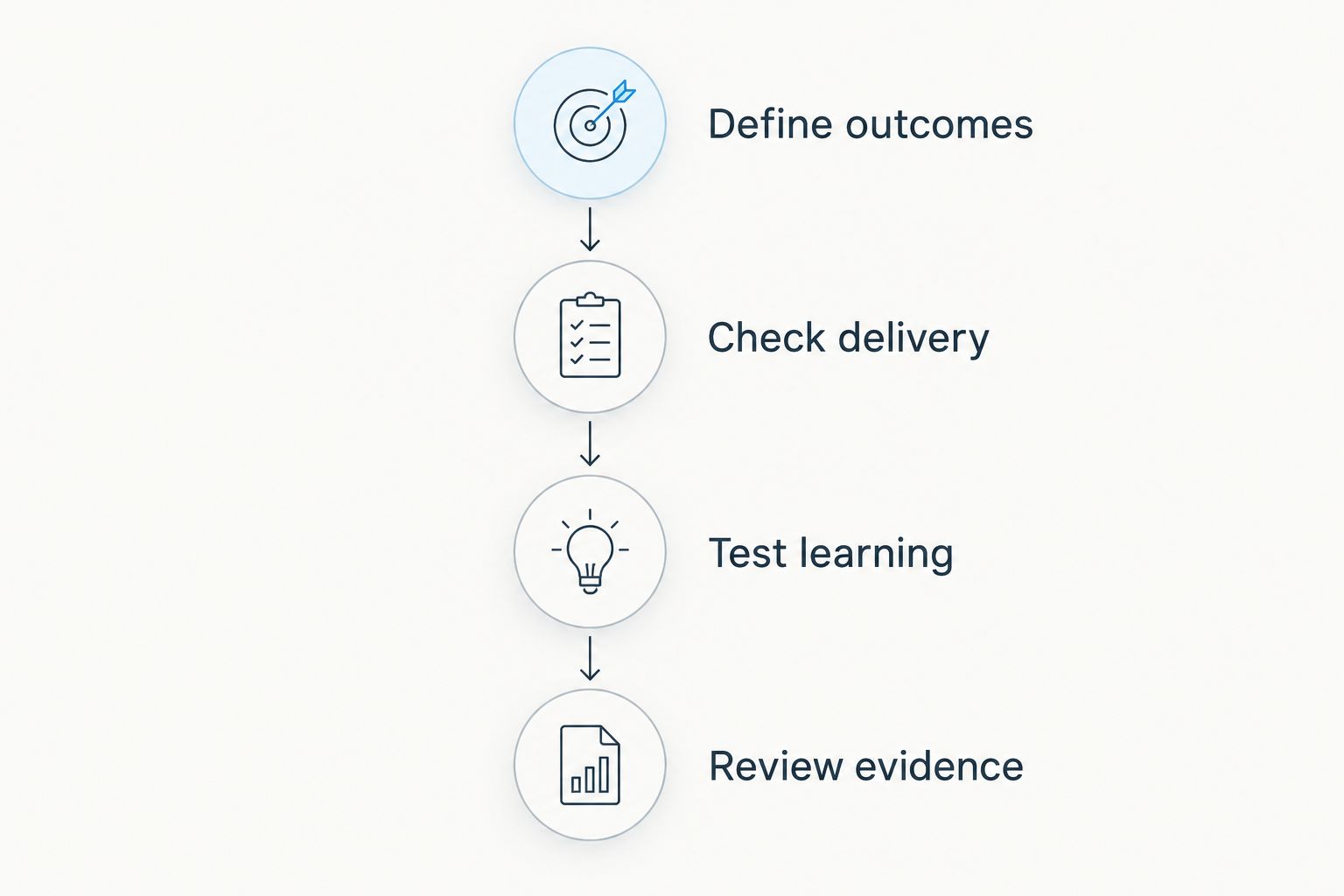
A pilot should test the employee experience and the administration behind it.
Set a bounded evaluation
Start with a 30-day pilot and 2 simulation campaigns if that fits your internal approval process. Reserve a 15-minute administrator review after each campaign to record manual tasks, support questions and reporting gaps.
These limits keep the evaluation bounded; they do not establish whether employee behaviour has changed permanently. Do not promise an outcome from a short trial.
Use comparable scenarios, but avoid sending identical messages in immediate succession. Employees recognising a repeated test is not evidence that one platform teaches better than another.
Separate delivery from learning
Record whether messages were delivered before interpreting employee interactions. A filtered simulation is a delivery result, not proof that staff recognised the threat.
For an external platform, review how to whitelist phishing simulation emails in Microsoft 365. Apply narrowly scoped, documented configuration rather than broadly weakening email protection.
Inspect the final report
Ask an administrator to explain the result without help from the vendor. The report should distinguish the intended audience, delivered messages, recorded interactions, employee reports and follow-up activity.
Investigate automated link inspection before treating every recorded click as an employee action. Preserve enough context to explain the event, and avoid public employee leaderboards that turn a learning exercise into a naming exercise.
Which alternative should you choose?
Start with KnowBe4 if you need a dedicated awareness programme and have not identified a more specific requirement. Choose Hoxhunt for adaptive coaching, Proofpoint for threat-informed awareness, usecure for automated administration or Gophish for self-hosted campaign control.
Keep Microsoft Attack Simulation Training if it meets your requirements and the pilot does not demonstrate a meaningful improvement. Replacing a working process without a clear benefit adds work rather than removing it.
Your 2026 decision should end with a named owner, documented acceptance criteria and an agreed follow-up process. The platform supports those decisions; it does not make them.
FAQ
What is the best Microsoft Attack Simulation Training alternative?
KnowBe4 is the default starting point for teams evaluating a dedicated phishing simulation and security awareness programme. Hoxhunt, Proofpoint, usecure and Gophish address more specific requirements, so compare them against your operating needs.
Should I replace Microsoft Attack Simulation Training if I already use it?
Replace Microsoft Attack Simulation Training only when another platform demonstrates an improvement against a defined requirement. Keep the existing process as your pilot baseline.
Is Hoxhunt better than KnowBe4?
Hoxhunt is the more relevant starting point when adaptive employee coaching is your primary requirement. KnowBe4 is the default candidate here for evaluating a broader dedicated awareness programme; neither wins every use case.
Is Gophish a complete security awareness training platform?
Gophish is a phishing campaign framework, not a complete managed awareness programme. Your team must arrange hosting, maintenance, employee education and follow-up processes.
Can I compare alternatives without migrating everyone?
Yes, use an authorised pilot group before committing to a wider migration. Document delivery settings, employee communications, permissions and the evidence required for acceptance.
Should phishing click rate decide which platform I buy?
No, click rate alone is not a sufficient buying criterion. Examine delivery, automated link inspection, employee reporting, follow-up quality and administrator effort alongside recorded interactions.
What should Australian teams ask vendors about employee data?
Ask vendors where employee data is stored, who can access it and how retention and deletion work. Obtain the answers in writing and assess them against your organisation’s privacy and contractual obligations.
One last thing
A simulation records an interaction, not the employee’s reasoning. Add a brief follow-up asking what the person noticed and what action they would take next.
That conversation exposes a gap a dashboard cannot explain on its own: someone can avoid a simulated link yet still not know where to report a real suspicious message.